
Seven intelligent welding robots have gone to work on the crane boom lines at Sany Heavy Industry's Ningxiang industrial park in Changsha, Xinhua News Agency reported. One worker now oversees two machines at once, and the line's cumulative welding length is expected to reach about 100,000 meters by the end of this year.
A boom is the core component of a crane. It gets assembled from multi-layer, multi-pass welds on ultra-high-strength steel plates tens of millimeters thick, where even a tiny defect can compromise the entire machine, and the process has long depended on experienced welders. Things used to look different. One welder babysat a single robot, watching the seam while adjusting with a handheld remote. Now AI handles the real-time sensing and adjustment, and workers mainly load and unload parts.
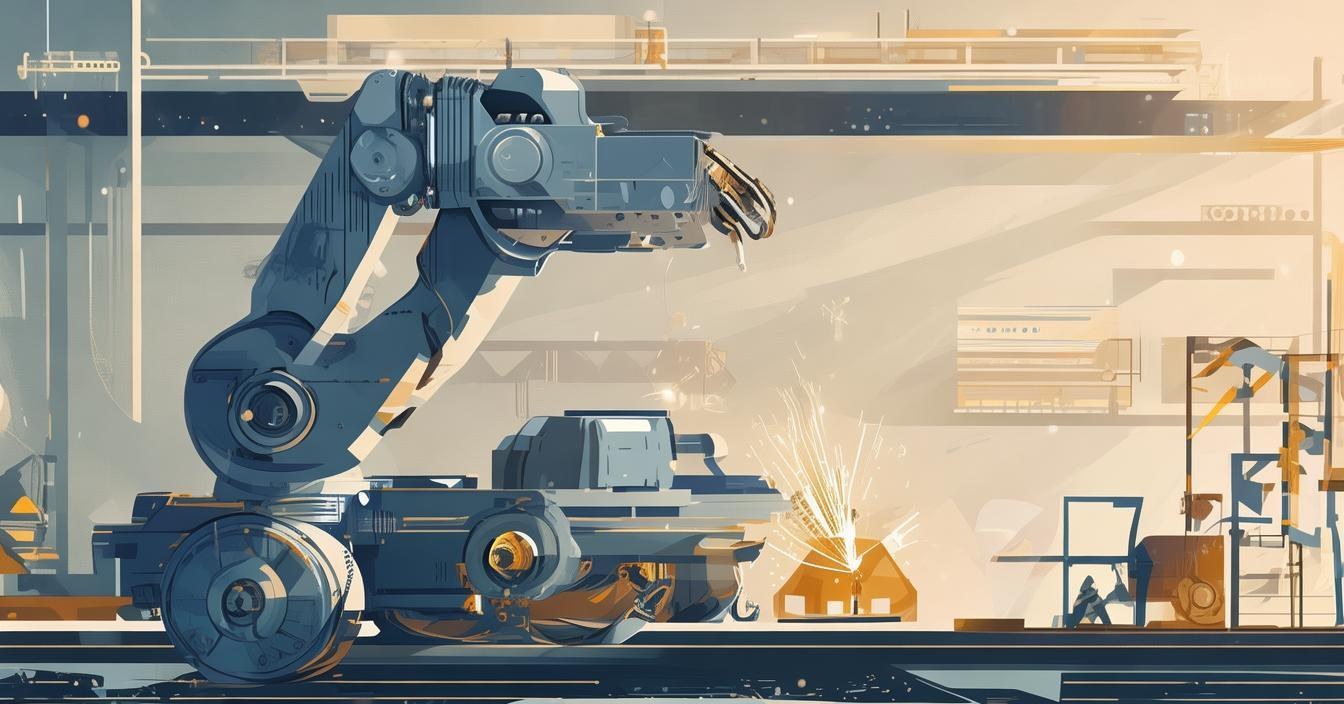
Duan Yuanwei, deputy dean of Sany's process research institute, breaks welding into five stages — recognition, calculation, execution, judgment and feedback — and notes that conventional robots could only execute. With embodied-intelligence techniques, the machines now do recognition and computation on their own. They perceive seam conditions through arc-light interference, adjusting torch movement and speed the way a seasoned welder would. RootCloud Technology built the robots, which are already in use across Sany's business units.
The craft took roughly 18 months of human-machine training to transfer. Senior welding process engineer Li Lin explained that veteran welders with years of experience welded test plates while a self-developed data system captured their actual techniques. Those results were then annotated and scored, letting the model learn from a decade of the company's high-quality welding data. Dai Lianhua, one of the veteran welders, likened the job to apprenticing an apprentice. The effort paid off. Since training, the first-pass flaw-detection rate of boom welds involving the robots has improved markedly.
The work itself is changing too. Welders no longer stand close to the arc for hours, which cuts their exposure to arc light, radiation and fumes, and experienced welders have become robot trainers who distill frontline expertise into training data. Sany runs 37 lighthouse factories using machine vision, process simulation and heavy-load robots, and the welding approach is expected to extend from crane booms to more component types.