
On Nov 21, at the third National Water Network and South-to-North Water Diversion High-Quality Development Forum in Beijing, China South-to-North Water Diversion Group officially released Tianhe model V2 for the diversion project. Group general manager Li Xiaozhen said the upgrade moves the model from foundation-building to deepened application, shifting water-network management decisions toward combined data, mechanism and intelligence drivers in support of engineering, water-supply and water-quality safety.
V2 continues to refine a "1+2+3+N" architecture: one Xinchuang intelligent-computing cloud base, multi-source high-quality water-network data, domestic general-purpose LLMs and multimodal models, specialized water-conservancy models, and N scenario-based agents, coupling the general foundation with domain expertise.
Flood control is the core scene of V2. The model is connected to 27 remote-sensing satellites and 237 weather radars, compressing flood-situation analysis from hours to minutes. During the 2026 flood season, facing super typhoons Bavi and Dolphin, Tianhe tracked storm tracks in real time, compared rainfall features of similar typhoons and ran flood simulations for cross structures on the middle route.
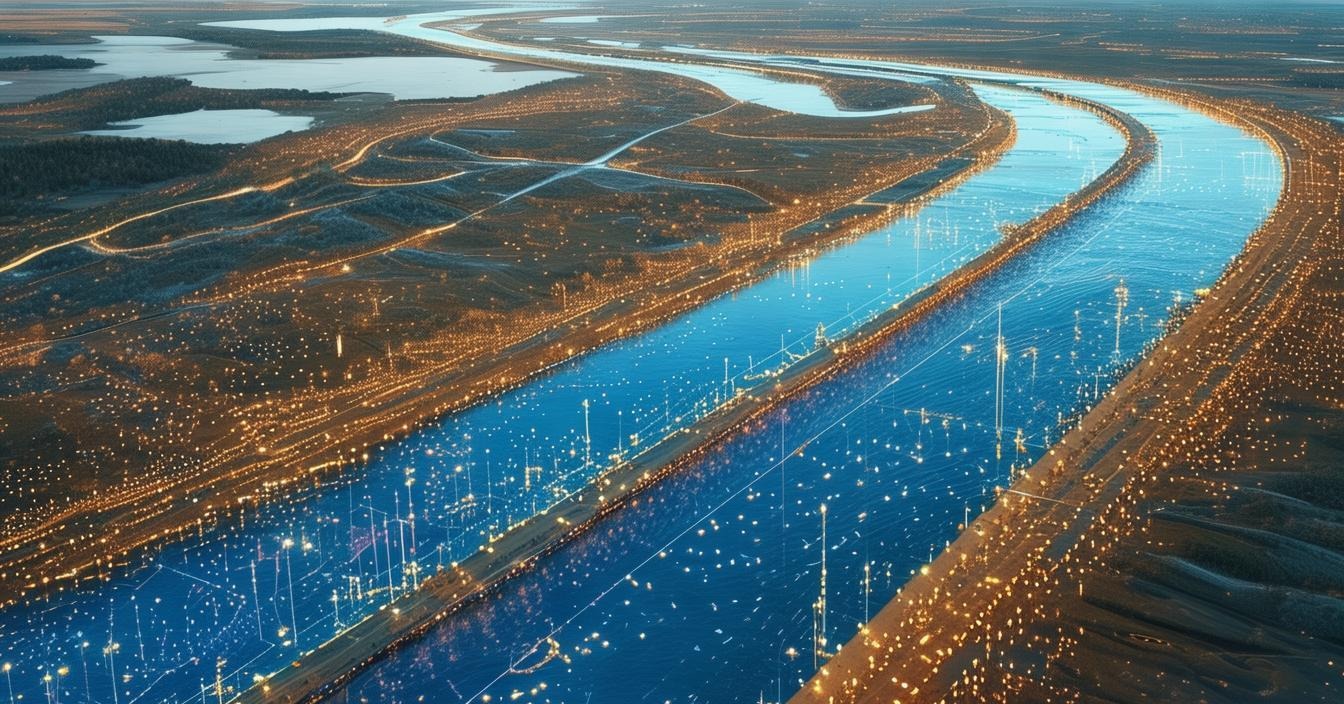
On water quality, 50 million monitoring records from source, conveyance and receiving areas have been catalogued; the water-quality rehearsal agent runs professional models to simulate pollutant transport and generates gate-dispatch proposals and emergency plans. During the 2025-2026 ice period, the model helped deliver 158 million cubic meters more water than planned.
Applications now reach across the engineering chain: an integrated air-space-ground-water-structure inspection system is piloted on the middle route, the Yinjiang-Buhan project uses inversion models to flag adverse geology ahead of tunnels, and AI assistants extend to auditing, finance, supply chain and contract management. The model holds 13 invention patents and passed CAICT's LLM safety benchmark.
For the 15th Five-Year period, the group plans continuous iteration toward a "smart brain" covering the full life cycle of water-network construction, operation and management. Flood response speed and extra water delivered now give the model measurable, business-level evidence of value.