
Ulanqab, a grassland city in Inner Mongolia, wants "token" on its nameplate. A November 13 Xinhua report says the city long known as a "grassland cloud valley" has released a three-year action plan covering 2026 through 2028, aiming to build itself into China's "Token Capital." The route is mapped in three stages, from cloud valley to intelligent-computing city and finally a token hub. The scale of the national market explains the ambition. Daily token consumption jumped from 100 billion in early 2024 to 100 trillion by the end of last year, and topped 140 trillion this March — more than a thousand-fold growth in two years. Tokens are becoming the meter of AI consumption, and Ulanqab wants to be where they are produced.
Under the plan, the city will attract companies in token production, metering, evaluation and security, and push toward a token trading platform. The idea is to make tokens measurable, priceable and tradable. The computing story, in other words, is shifting from building server halls to selling tokens.
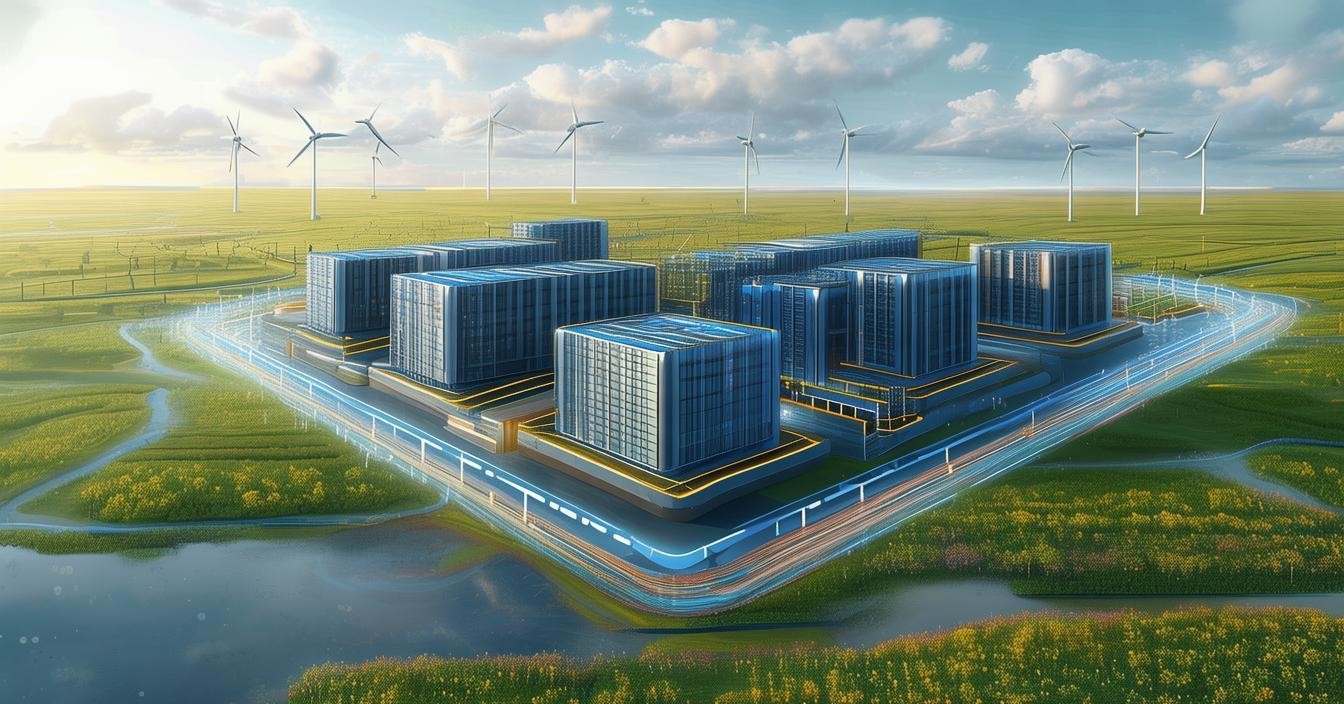
The bet rests on electricity. Industry estimates put daily power use at roughly 2,400 kWh per petaflop of computing capacity, meaning 1,000P consumes about 876 million kWh a year. Electricity already accounts for more than half of operators' running costs, so cheap power is the whole game. Ulanqab happens to sit in a national class-one wind resource zone with reserves of about 50 million kW. It gets more than 280 days a year of usable wind and over 3,200 hours of sunshine. Grid-connected renewable capacity stands at 21.18 million kW, or 67 percent of total installed power.
A flagship project is already running. In July 2025, China's first green-power direct-connect source-grid-load-storage project dedicated to a data center came online — the China Golden Data Ulanqab project. It pairs 300,000 kW of green power with 45,000 kW of storage, delivering clean electricity over a 16-km dedicated line. The site self-consumes about 848 million kWh of green power a year and cuts 580,000 tons of carbon, work that CAICT recognized as a computing-power synergy case. Similar projects by Sinnet, Zhonglian and Envision have since been approved or started construction.
The city is also planning a "green direct supply plus incremental distribution network" model, treating the whole data-industry park as one distribution unit fed by jointly developed wind and solar. Coastal rivals compete on chips and cluster scale. This grassland city is betting on a different variable instead, the cheapest green power producing the cheapest tokens.