
The spillover of the AI infrastructure race is outpacing most forecasts. According to an October 24 report by MyDrivers, Nvidia founder and CEO Jensen Huang made his first visit to Astana on October 23, meeting President Tokayev and AI Minister Madiev, and formally proposing to build Kazakhstan into a global physical-AI hub — in his words: stop exporting energy alone, and start converting energy into intelligence, then export intelligent solutions.
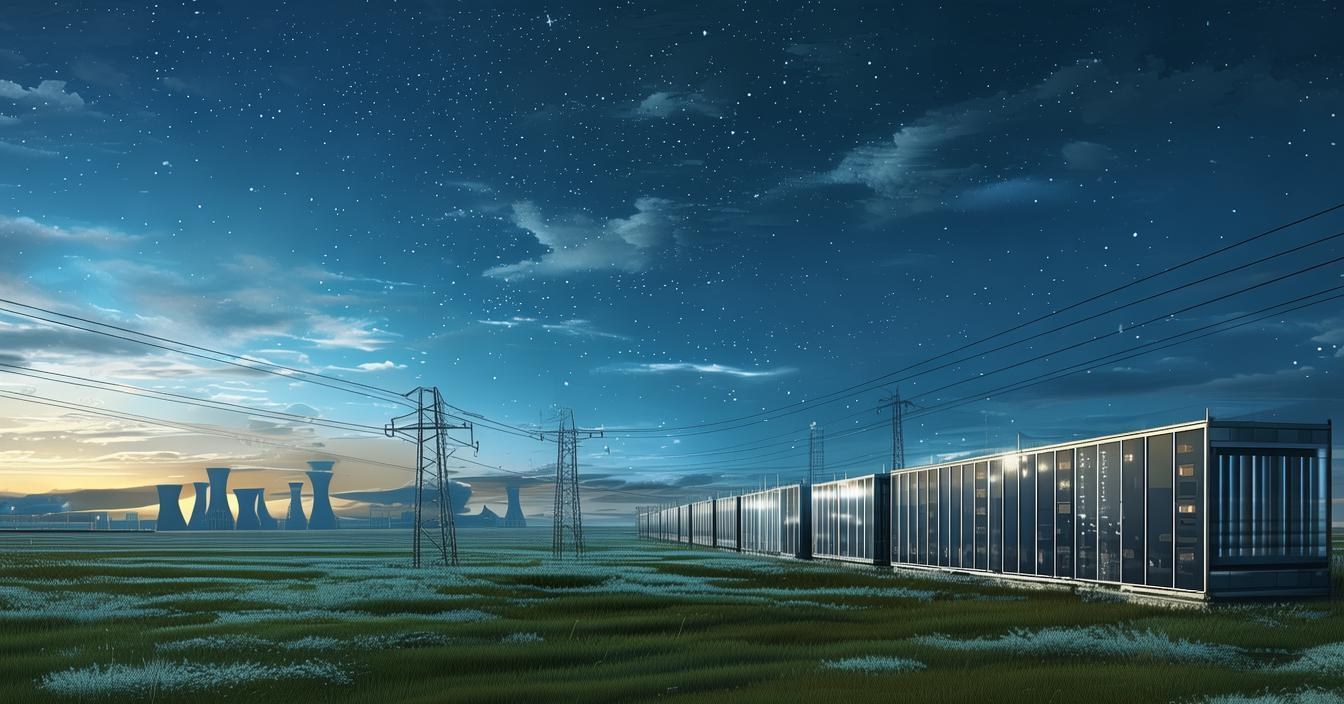
1. A data-center valley with 100,000 GPUs
The anchor is the Ekibastuz data-center valley project, advanced by Nvidia with US AI-infrastructure developer Firebird: $10 billion in initial investment, ~100,000 Nvidia GPUs planned, with the first 50MW phase due to enter operation in June 2027. Huang's arithmetic: each gigawatt of computing infrastructure represents roughly $50 billion of investment; at an eventual 5GW, total investment would reach $250 billion, with up to $1 trillion in combined economic impact for Kazakhstan.
Project notes
① Site: Ekibastuz — Kazakhstan's coal capital, next to large coal-fired generation and grid facilities;
② Resource base: estimated 25.6 billion tonnes of coal reserves, among the world's largest, giving AI factories cheap power;
③ Timeline: first 50MW in June 2027; long-term plan up to 5GW;
④ Structure: Nvidia × Firebird partnership.
2. The energy logic of compute offshore
The deal essentially converts an energy endowment into a compute endowment. As US data centers strain grids and interconnection queues stretch to years, shifting training and inference loads to energy-rich, land-cheap, Western-leaning Central Asia is a coherent path. Kazakhstan's calculus is equally clear: coal and uranium alone do not build high-value industries, but the chain of “power → compute → intelligent services” might.
3. Three obstacles behind the grand narrative
The Carnegie Endowment has warned that Central Asia's digital ambitions may be constrained by: ① unstable grids — AI data centers are acutely sensitive to power fluctuations; ② limited international connectivity — landlocked bandwidth and latency are hard constraints; ③ regulatory barriers — data-cross-border and foreign-operation rules remain unsettled. Whether Kazakhstan converts energy into compute depends less on Nvidia's chips than on synchronized execution across power, network and policy.
From GTC Berlin to Astana within two weeks, Nvidia's 2026 narrative has shifted from selling chips to planning compute geography — whoever controls energy and land holds the next ticket.
For China, the drift of compute toward energy-rich regions is both reference and opportunity: the “northwest green power + smart data center” combination repeats the same logic domestically. NineZenith's TianShield platform offers cross-region compute scheduling and full-chain monitoring, placing workloads where cost is optimal across heterogeneous compute sources.
(Compiled from MyDrivers and other public reports.)